Push-ups remain among the most effective body-weight exercises. Yet many people execute them with flaws that reduce their benefit and increase injury risk. Let’s walk through how to perform a push-up correctly, what cues to follow, common mistakes to avoid, and ways to progress once your form is solid.
Why Form Matters
From the very start of the video the presenter challenges: “How many push-ups have you been doing wrong? Watch this.” This sets the tone — form isn’t optional. Without proper alignment and control, your muscles won’t engage optimally, and joints (especially shoulders and wrists) may bear unintended stress.
When you perform a push-up with careless positioning — hips sagging, elbows flaring, shoulders rounding — you compromise both performance and safety. A good push-up bases on rigid body alignment, correct hand placement, controlled movement, and full muscular engagement.
Body Alignment: The Straight Line
Begin by positioning your body in a straight line from your ankles through your hips up to your shoulders. Avoid letting your hips sag toward the floor or your butt shoot upward. Instead, maintain a plank-like torso, with the core and glutes engaged so the spine stays neutral throughout.
This alignment ensures your body moves as a unit, rather than breaking at the hips, which protects your lower back and helps your chest, shoulders and triceps share the load in the right way.
Hand and Arm Placement
Hand position plays a huge role in how your muscles activate. The presenter recommends placing your hands roughly shoulder-width apart, directly beneath your chest region. Placing them too far forward or too wide shifts the stress away from the optimal muscle groups and can strain the shoulders.
Arm angle matters too. Instead of flaring your elbows straight out to the sides, keep your elbows at around 30-45 degrees relative to your ribcage. Many body-weight fitness practitioners back this angle:
“You should do push-ups with your elbows in a comfortable position between 30 and 45 degrees away from your ribs.” Reddit
By doing so you reduce shoulder stress and increase stability, while improving activation of the chest and triceps.
Movement Execution: Descent & Ascent
On the way down, lower yourself under control until your chest comes close to the floor. Resist the temptation to “drop” — letting gravity do the work. A brief pause at the bottom level helps avoid using bounce and ensures tension remains in your muscles.
On the ascent, push through the palms of your hands, extend your arms by driving your body upward, but avoid aggressively locking out your elbows. Keep the tension in your muscles, maintain core engagement, and return to the straight-body alignment you started with.
Engaging Supporting Muscles
A push-up isn’t just a chest or arm movement. It engages core, glutes, upper back stabilisers and even the legs to a degree. As you hold your body in that straight line, consciously tighten your abdomen and squeeze your glutes. Doing so stabilises your spine, prevents sagging hips, and increases the effectiveness of the movement.
Without that engagement, your body might compensate — hips drop, lower back arcs, shoulders roll forward — making the exercise less efficient and potentially risking injury.
Common Mistakes & How to Fix Them
- Hips sagging or butt elevated: Fix this by actively engaging glutes and core before starting the rep.
- Hands placed too wide or too far forward: Adjust them so they are shoulder-width and aligned under your chest.
- Elbows flaring out wide: Keep elbows tucked at 30-45° relative to your ribs.
- Speed over control: Lower with control, pause briefly, push up cleanly.
- Shoulders rounding forward: Retract your shoulder blades slightly at the top and keep your chest open.
- Neglecting opposing muscle groups: If you’re doing lots of push-ups, also include pulling/rowing movements to maintain shoulder and posture balance. Reddit
Progressions & Variations
Once you master the basic push-up form, you can explore variations to challenge your muscles differently. For example:
- A narrower hand placement shifts more load to the triceps.
- A wider hand placement emphasises the chest more.
- Feet elevated increases difficulty by shifting more weight toward the upper body.
- Weighted push-ups add a further challenge — but only after you’ve built solid form and control. Glasp
Safety & Smart Programming
Push-ups may look simple, but they carry risks if you tangle form issues, over-training and muscular imbalance. Many subreddit users warn about doing large numbers of push-ups daily without counterbalancing pulling movements:
“If you’re doing push ups everyday … you NEED to be doing a pulling / rowing exercise as well, otherwise … the chest muscles … will tighten and bring your shoulders too far forward …” Reddit
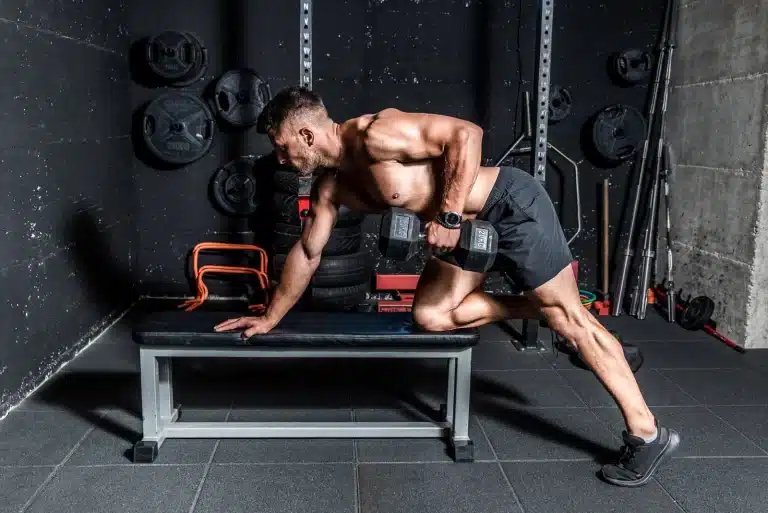
Including pulling exercises — such as rows or pull-ups — helps maintain balanced strength, healthy posture and shoulder joint health.
Also ensure you warm up properly, especially the shoulders and wrists, before logging high volumes of push-ups. Listen to your body: pain, persistent soreness or shoulder clicking may mean you need to back off, reassess your form or bring in a professional.
Bringing It Together
To deliver maximum strength and safety from push-ups, treat each rep as a controlled, full-body movement rather than a quick set tick. Begin with alignment: straight body, engaged core and glutes. Place your hands correctly. Lower with control, keep the correct elbow angle, push up fully but without careless lock-out. Once your form is consistent and pain-free, branch into purposeful variations.
All in all, done right, push-ups become more than a simple body-weight movement — they become a foundation for upper-body strength, joint resilience and efficient muscle engagement.