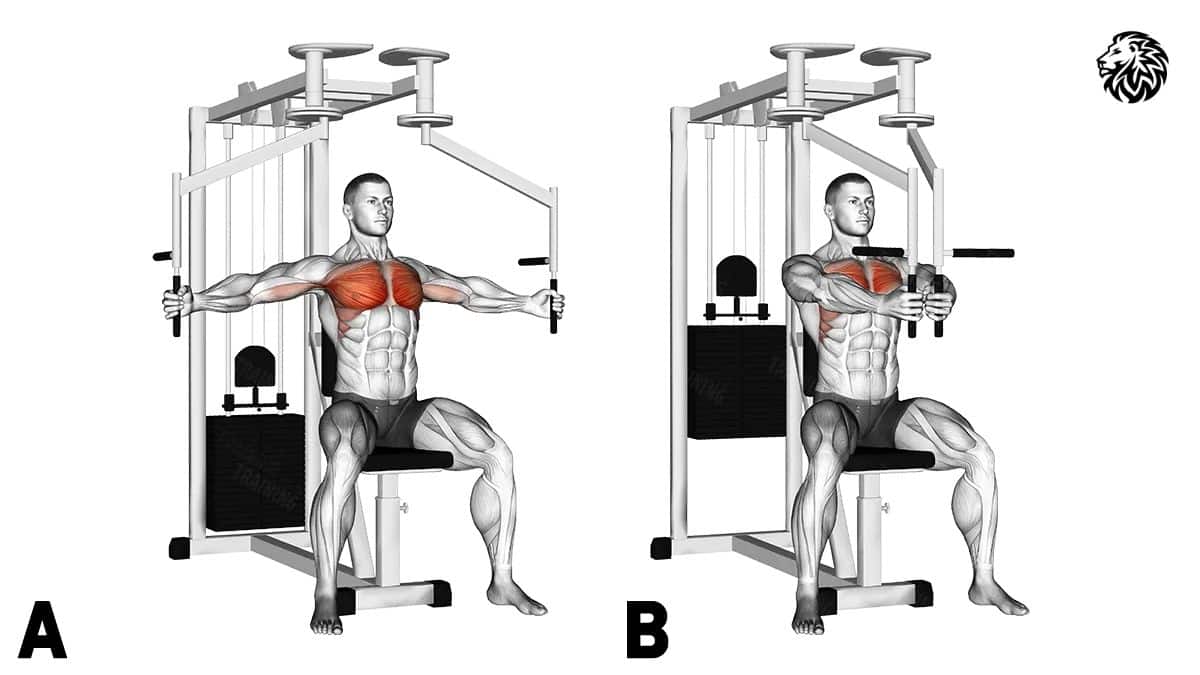
The Machine Fly, often called the Pec Deck Fly, is one of the most effective exercises for isolating the chest muscles. Unlike free weights, this machine provides controlled resistance throughout the movement, making it easier to focus on form and muscle contraction. Whether you’re a beginner learning proper chest engagement or an experienced lifter refining technique, the Machine Fly helps develop a stronger, more defined chest.
Exercise Instructions
- Adjust the seat height:
Sit on the machine and adjust the seat so that the handles are at chest level. This alignment ensures proper targeting of the pectoral muscles. - Set the weight:
Choose a manageable weight that allows full range of motion without compromising control. Start light and increase gradually as your strength improves. - Position yourself correctly:
Sit with your back flat against the pad and feet planted firmly on the floor. Grip the handles with a neutral or slightly pronated grip, depending on the machine design. - Perform the movement:
With a slight bend in your elbows, bring the handles together in front of your chest in a controlled motion. Focus on squeezing your chest muscles at the midpoint. - Return to the starting position:
Slowly open your arms back to the starting position without letting the weight stack touch. Keep tension on your chest throughout the movement. - Breathe properly:
Exhale as you bring the handles together and inhale as you return to the starting position.
Muscles Targeted
The Machine Fly primarily targets the pectoralis major, the large muscle of the chest responsible for arm adduction and internal rotation. It also engages the pectoralis minor, a smaller muscle beneath the major that supports shoulder stabilization. Secondary muscles include the anterior deltoids (front shoulders) and biceps as stabilizers. Because of the isolation provided by the machine, you can fully focus on contracting the chest without relying heavily on supporting muscles.
Why This Exercise is Important
The Machine Fly is essential for chest development because it isolates the pectoral muscles more effectively than many compound movements. It allows you to achieve a deep stretch and strong contraction with minimal joint strain. This makes it especially useful for those recovering from shoulder issues or looking to supplement pressing exercises like the bench press. Additionally, it enhances mind-muscle connection, helping you control chest engagement and improve symmetry between the left and right sides.
Regularly including Machine Fly in your chest workouts contributes to better muscle definition, improved posture, and stronger pushing strength. It’s also beginner-friendly, offering guided movement that reduces the risk of improper form or injury.
Tips and Things to Avoid
- Maintain a slight bend in your elbows: Avoid locking your elbows to prevent unnecessary stress on your joints.
- Focus on slow, controlled movement: Don’t rush the exercise; use steady motion to keep tension on the chest muscles.
- Avoid overextending your arms: Stretching too far back can strain your shoulders. Stop when you feel a comfortable stretch.
- Engage your core: Keep your abdominal muscles tight for stability and better posture during each rep.
- Do not use excessive weight: Too much resistance can lead to poor form and reduce chest activation. Prioritize technique over load.
- Squeeze at the top: Hold the contraction for one or two seconds to maximize chest engagement before returning to the start position.
Reps and Sets
| Fitness Level | Sets | Repetitions | Rest Time |
|---|---|---|---|
| Beginner | 3 | 10–12 | 60–90 seconds |
| Intermediate | 3–4 | 8–10 | 60 seconds |
| Advanced | 4–5 | 8–12 | 45–60 seconds |
For hypertrophy, aim for moderate weight with higher volume. To build endurance, reduce weight slightly and increase reps.
Other Exercises to Use
To complement the Machine Fly, incorporate these exercises into your chest routine:
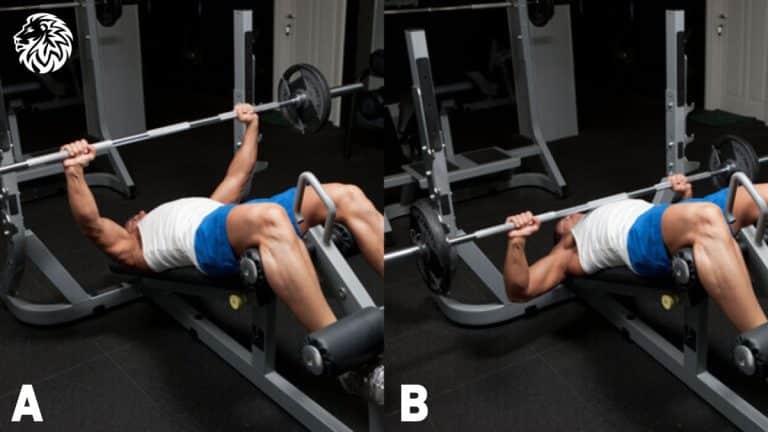
- Flat Barbell Bench Press: Builds overall chest mass and strength.
- Incline Dumbbell Press: Focuses on the upper chest for a more balanced physique.
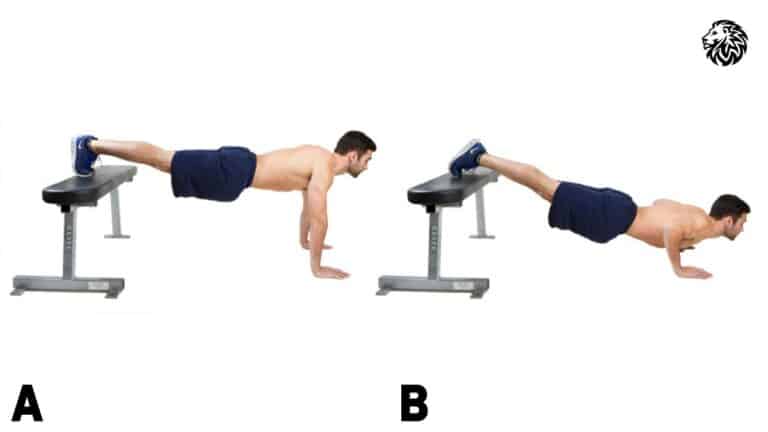
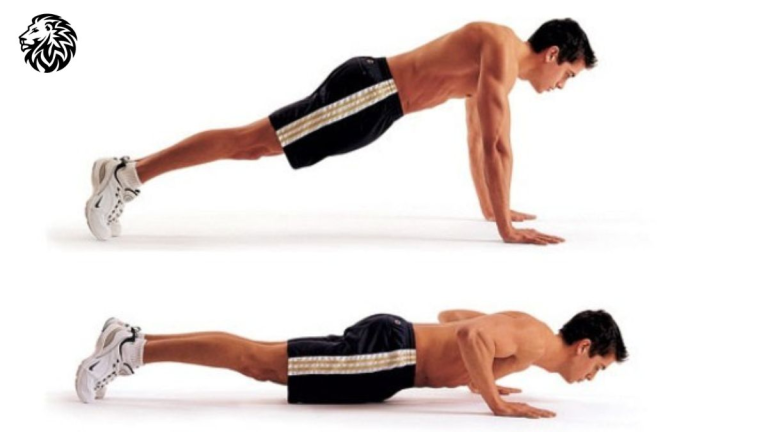
- Pushups: A bodyweight staple that strengthens chest, shoulders, and triceps.
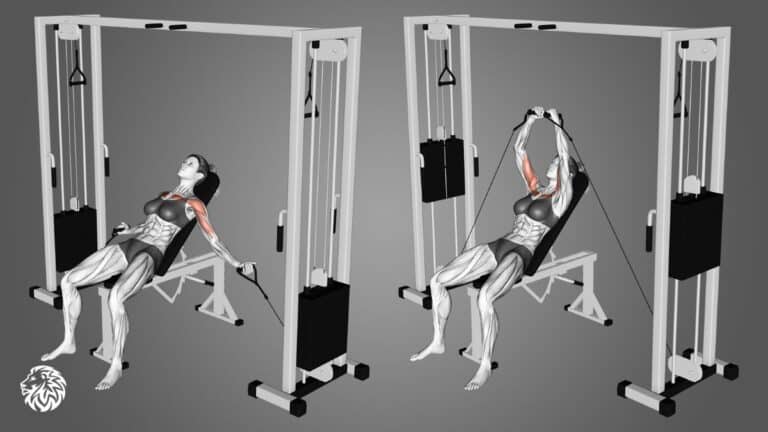
- Cable Crossovers: Offers a similar motion to the Machine Fly but adds adjustable resistance and range of motion.
- Chest Dips: Targets the lower chest while engaging triceps and shoulders.
These exercises together help create a well-rounded chest workout that develops strength, size, and definition.
Final Thoughts
The Machine Fly is a reliable chest isolation exercise suitable for all fitness levels. Its controlled movement helps you focus on form, build muscle symmetry, and reduce strain on the shoulders. Whether you’re training for strength or aesthetics, incorporating Machine Fly into your workouts ensures consistent progress in chest development. Use it alongside compound lifts to achieve balanced upper-body strength and muscle tone.
Frequently Asked Questions
1. Is the Machine Fly good for beginners?
Yes. The guided motion makes it ideal for beginners learning proper chest engagement without worrying about balance or form errors.
2. How often should I do Machine Fly?
Include it 1–2 times per week as part of your chest or push day routine. Allow at least 48 hours of rest between sessions for recovery.
3. Should I do Machine Fly before or after bench press?
For most lifters, it’s best to perform Machine Fly after compound lifts like the bench press to pre-exhaust the chest muscles safely.
4. Can I replace dumbbell flyes with Machine Fly?
Yes. The Machine Fly offers a safer, more controlled alternative with consistent resistance throughout the range of motion.
5. What is the best grip to use?
A neutral or slightly pronated grip is most comfortable and effective for engaging the chest while minimizing shoulder strain.