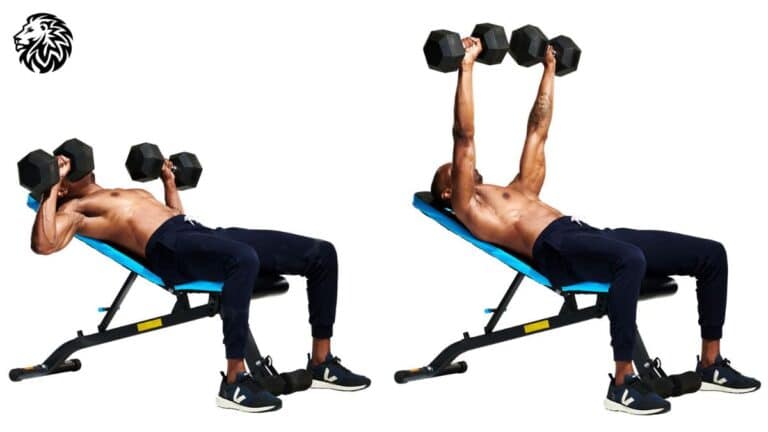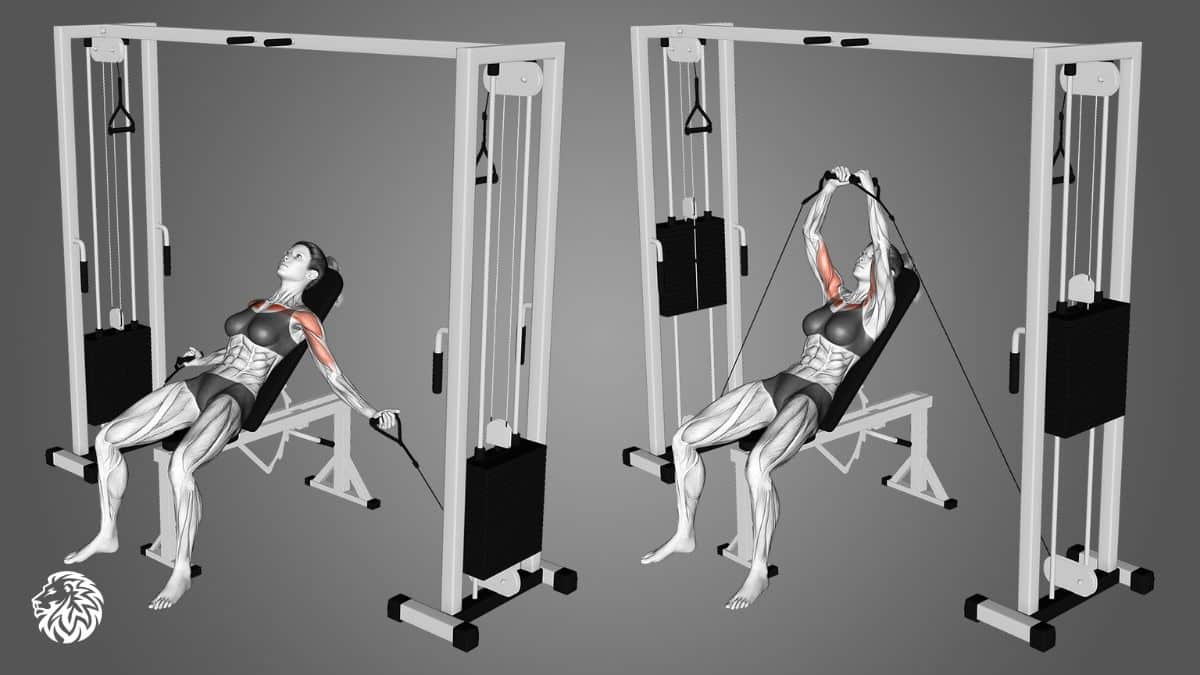
The Incline Bench Cable Chest Fly is a powerful exercise for building chest strength and improving muscle definition. Unlike dumbbell flyes, the cable setup keeps constant tension on your muscles, which helps you recruit more fibers throughout the entire range of motion. This makes it an excellent addition to your upper chest workout. Whether you’re a beginner learning to train smarter or an advanced lifter refining technique, this movement can give you noticeable results.
Exercise Instructions
- Set Up the Equipment: Position an adjustable bench at a 30- to 45-degree incline. Place it between two cable machines, and attach D-handles to the low pulleys.
- Starting Position: Sit on the bench with your feet flat on the ground. Grab the handles with palms facing upward, and lean back against the bench. Keep your arms slightly bent, elbows soft, and hands in line with your chest.
- The Movement: Exhale and bring your hands together in a wide arc, squeezing your chest at the top. Avoid locking out your elbows; keep the tension on your pecs.
- Return: Slowly lower your arms back to the starting position. Keep control of the weight—do not let it snap back.
- Breathing: Exhale on the contraction (bringing handles together) and inhale as you return to the start.
- Form Checkpoints:
- Keep shoulders pressed into the bench.
- Avoid shrugging or rolling your shoulders forward.
- Maintain a controlled tempo—about 2 seconds up and 3 seconds down.
Muscles Targeted
The Incline Bench Cable Chest Fly primarily works the upper chest (clavicular head of the pectoralis major). Secondary muscles involved include:
- Anterior deltoids: Assisting in shoulder movement.
- Biceps (short head): Providing stability during the fly motion.
- Serratus anterior: Supporting shoulder blade movement.
- Core muscles: Helping stabilize your torso on the incline bench.
This muscle activation makes it one of the best exercises for shaping and strengthening your upper chest while improving shoulder stability.
Why This Exercise is Important
Building a well-rounded chest requires targeting different angles, and many lifters neglect the upper portion. The Incline Bench Cable Chest Fly ensures balanced development, which contributes to both aesthetics and performance. It can also improve posture by counteracting forward shoulder rounding caused by too much flat pressing. Constant cable tension challenges your muscles more effectively than free weights alone, encouraging growth and endurance.
If your goal is strength, aesthetics, or injury prevention, this exercise plays a valuable role in your chest training routine.
Tips and Things to Avoid
- Do keep a slight bend in your elbows. Locking them out shifts strain onto your joints instead of your chest.
- Don’t go too heavy. Choose a weight you can control with good form. This is not a powerlifting move.
- Do control the negative. The eccentric (lowering) portion is where much of the muscle growth happens.
- Don’t flare your elbows too wide. This increases the risk of shoulder injury.
- Do keep your chest lifted. This ensures you target the pecs instead of the front delts.
- Don’t let the handles touch at the top. Stopping just short keeps tension on the chest.
Reps and Sets
| Goal | Sets | Reps | Rest Between Sets |
|---|---|---|---|
| Muscle Growth | 3–4 | 10–12 | 60–90 seconds |
| Strength & Power | 4–5 | 6–8 | 2 minutes |
| Endurance/Toning | 2–3 | 15–20 | 45–60 seconds |
Other Exercises to Use
To round out your chest training, pair the Incline Bench Cable Chest Fly with:
- Incline Bench Press (Barbell or Dumbbell): Builds raw strength in the upper chest.
- Flat Bench Dumbbell Fly: Complements the incline version for full chest activation.
- Push-Ups (Incline or Decline): A bodyweight option for strength and stability.
- Pec Deck Machine: Offers a stable fly alternative with controlled range of motion.
- Dips: Targets the lower chest while adding variety.
Combining these exercises with the cable fly creates a balanced workout for strength, size, and symmetry.
Final Thoughts
The Incline Bench Cable Chest Fly is a must-try exercise if you want to build a stronger, more defined upper chest. By using cables instead of free weights, you maintain constant tension, which helps stimulate muscle growth more effectively. Stick to controlled form, avoid rushing, and keep your focus on quality movement over heavy loads. Over time, you’ll notice improved chest shape, strength, and stability. Add it into your routine twice per week, and your upper chest will thank you.
Frequently Asked Questions
Is the Incline Bench Cable Chest Fly safe for beginners?
Yes, as long as you start with light weight and focus on proper form.
How high should I set the bench?
A 30- to 45-degree incline is ideal. Too steep, and it shifts the load to your shoulders.
Should I do this before or after pressing exercises?
Many lifters use it as an accessory exercise after presses, but you can also start with it to pre-exhaust your chest.
How often should I include this in my workouts?
Two times per week is effective for most training plans.
What’s the difference between dumbbell and cable flyes?
Dumbbells provide resistance only at certain points in the range of motion, while cables keep your chest under tension the entire time.