Concentration Curls give you a focused way to build stronger, fuller biceps with minimal equipment. This exercise limits body momentum and forces your arm to handle the entire load, which leads to better muscle control and steady gains. Many lifters use Concentration Curls when they want to improve arm shape, increase strength, or develop the peak of the bicep.
You can do this movement at home or in the gym with a single dumbbell and a sturdy seat. Once you learn how to position your body, you’ll feel the burn in every rep.
Exercise Instructions for Concentration Curls
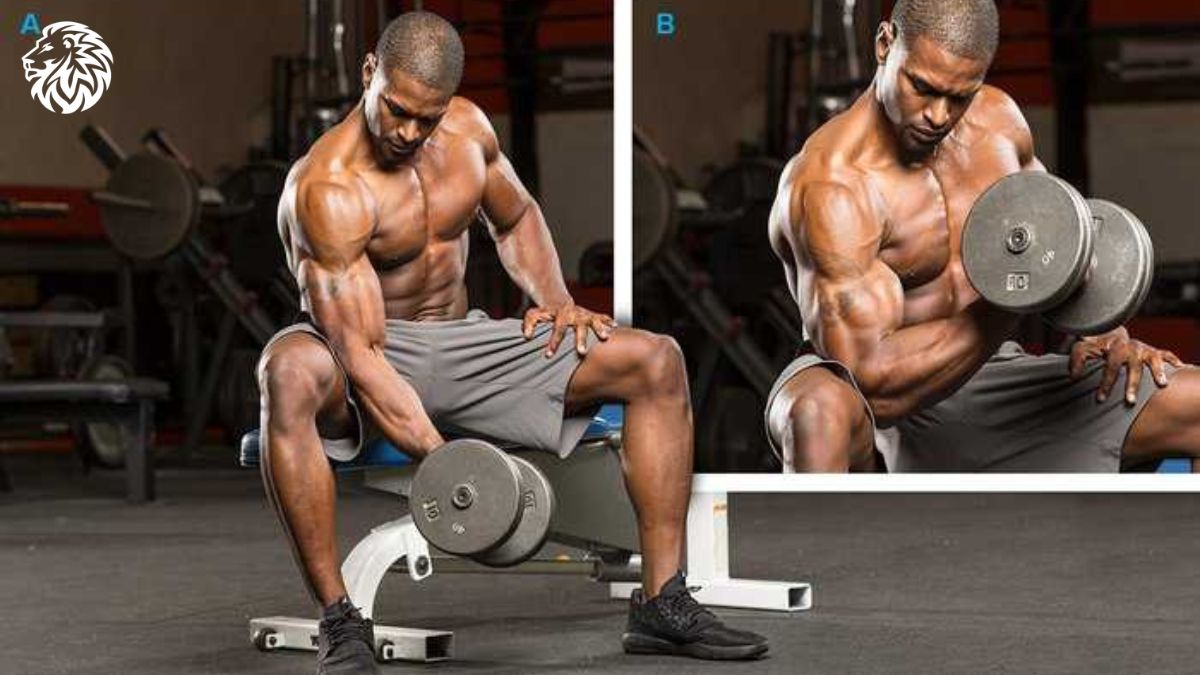
- Sit on a bench or chair with your feet flat on the ground and your legs slightly apart.
- Hold a dumbbell in your right hand and lean forward so your right elbow rests against the inside of your right thigh near the knee.
- Let the dumbbell hang straight down with your arm fully extended.
Once you’re in position:
- Keep your back straight and your core engaged.
- Curl the dumbbell upward in a smooth arc until it reaches shoulder height.
- Squeeze your bicep at the top of the movement to create full tension.
- Lower the weight under control until your arm straightens again.
For balanced training:
- Complete all reps on your right arm before switching to your left arm.
- Maintain steady breathing—exhale as you lift and inhale as you lower—to keep your shoulders relaxed and your rhythm smooth.
Muscles Targeted with Concentration Curls
Concentration Curls target the biceps brachii, which includes the long head and short head. Because your arm stays fixed in a stable position, you place more tension on the long head. This helps shape the peak of your biceps.
Your brachialis and brachioradialis also support the movement. These muscles sit beneath and beside the biceps, and they help your arm handle more load during the curl. Over time, strengthening these supporting muscles gives your arms a fuller look.
Why This Exercise is Important
Concentration Curls help you build focused strength because the technique removes much of the momentum you might use in other curl variations. Without swinging your body, your biceps must work through every inch of the range of motion, which leads to steady growth.
This exercise is also useful for lifters who want better muscle symmetry. Working one arm at a time allows you to spot weaknesses and correct them. If your non-dominant arm lags behind, you can give it more attention to match the other side.
Because the exercise guides you through a controlled motion, it also helps you improve mind-to-muscle connection. That connection increases your ability to contract your biceps fully during other pulling movements.
Tips and Things to Avoid for Concentration Curls
Choose a dumbbell that allows you to complete each rep with control. Using a weight that is too heavy can force you to lean back or shift your torso, which reduces the exercise’s effectiveness.
Keep your elbow locked in place against your leg. If your elbow drifts forward or outward, your shoulder takes over and your biceps lose tension.
Lower the weight slowly. Many lifters rush the lowering phase, but you gain a lot of muscle benefit from that controlled motion. Count one or two seconds as the dumbbell descends.
Avoid twisting your wrist at the top. Some people turn the dumbbell far outward, which can strain the forearm and reduce bicep tension. A slight natural turn is fine, but the curl should feel smooth and comfortable.
Stay relaxed in your shoulders. Your upper body should not lift the weight. Keep your chest steady and let your bicep perform the movement.
Reps and Sets for Concentration Curls
| Training Goal | Sets | Reps | Rest |
|---|---|---|---|
| Strength | 3–4 | 6–8 per arm | 60–90 seconds |
| Muscle Growth | 3–4 | 8–12 per arm | 60–75 seconds |
| Endurance | 2–3 | 12–15 per arm | 45–60 seconds |
Other Exercises to Use with Concentration Curls
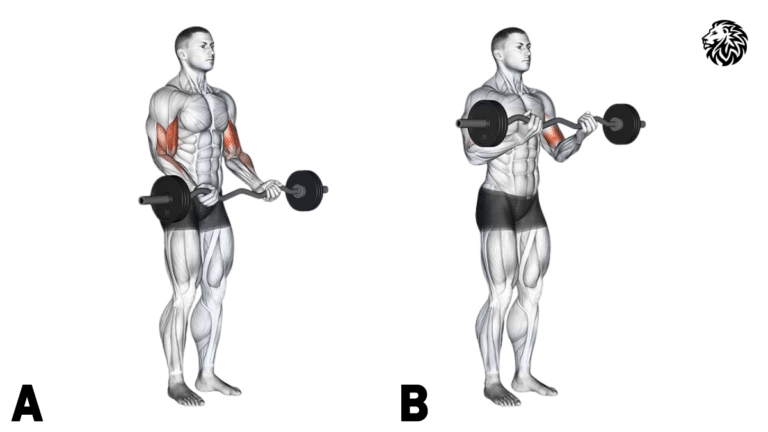
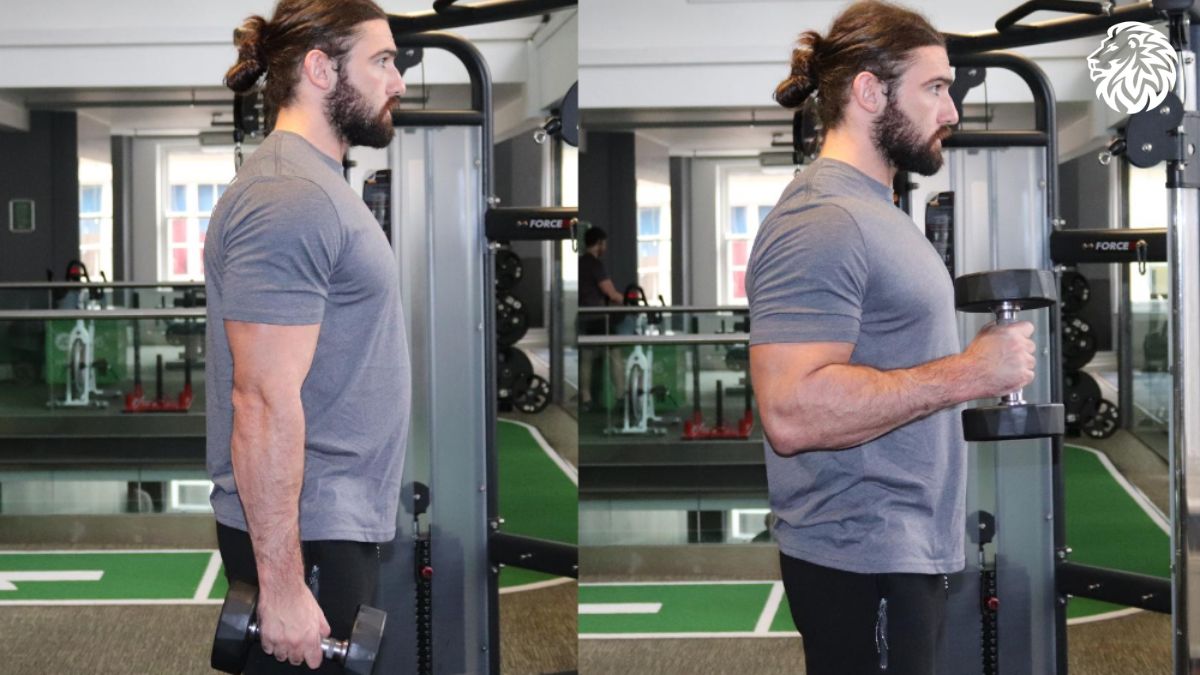
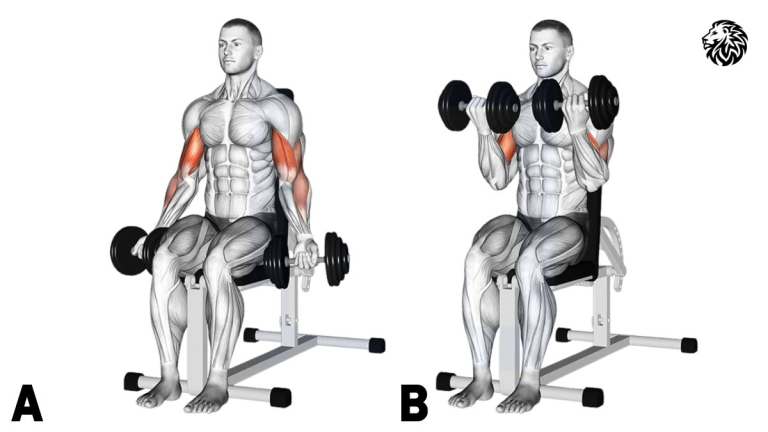
You can pair Concentration Curls with several other bicep exercises to create a balanced routine. Standing Dumbbell Curls work both arms at once and allow for heavier loading. Hammer Curls add forearm strength and target different parts of the upper arm. Incline Dumbbell Curls stretch the biceps and increase time under tension.
Row variations such as Bent-Over Rows or Seated Cable Rows also support your progress because strong pulling muscles complement stronger arms. Using these exercises together creates a complete upper-body routine that supports growth and balanced strength.
Final Thoughts on Concentration Curls
Concentration Curls remain one of the most effective isolation exercises for building stronger, more defined biceps. Because the movement limits body momentum, you get steady tension across each rep. You can include this curl in nearly any program, from beginner to advanced.
As long as you focus on form, control your tempo, and train both arms evenly, you’ll see meaningful progress over time. Use the tips above to build better execution and support long-term development.
Frequently Asked Questions
Are Concentration Curls good for beginners?
Yes. They teach control and help new lifters learn how to contract their biceps without using their shoulders or back.
Should I go heavy on Concentration Curls?
Use a weight that challenges you but still allows clean, controlled reps. The goal is full tension, not swinging.
How often should I do Concentration Curls?
Most people train them one to two times per week as part of a full arm or upper-body routine.
Where should I feel the exercise?
You should feel the tension in the center of your bicep. If you feel it mostly in the shoulder, adjust your elbow position and reduce the weight.
Can I use a kettlebell instead of a dumbbell?
Yes, though a dumbbell usually feels more natural. If you use a kettlebell, hold it by the handle and maintain full control.