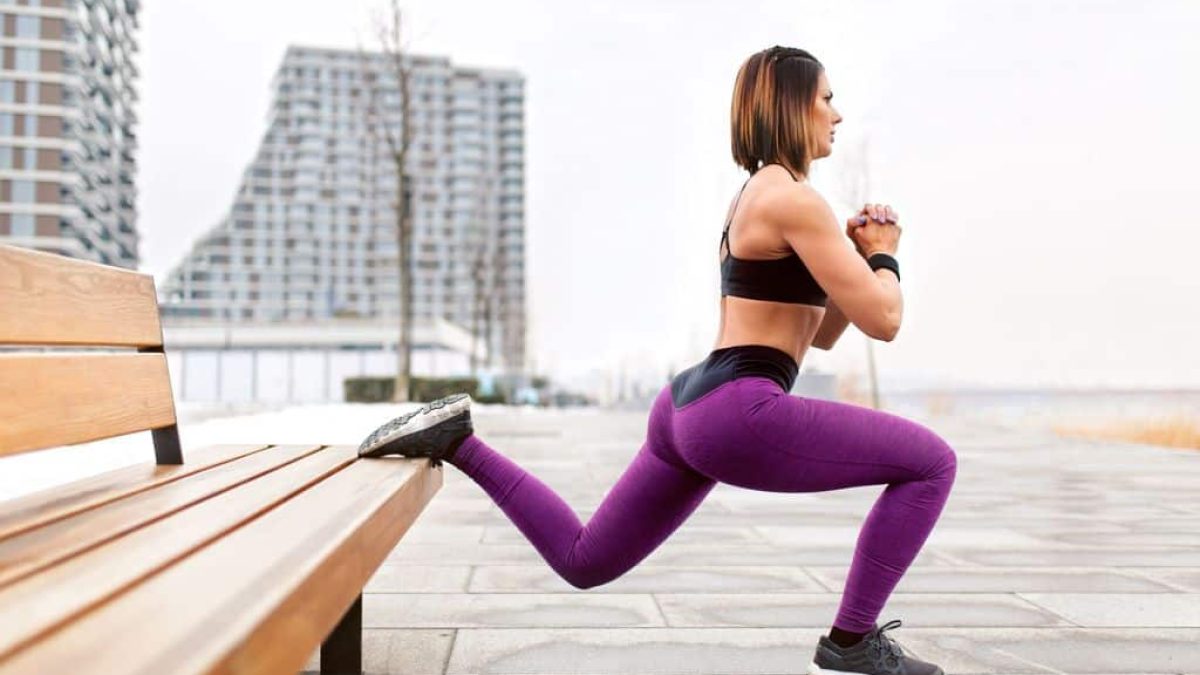
The Bulgarian split squat is one of the most effective lower-body exercises for building strength, balance, and stability. It targets the quads, glutes, and hamstrings while also enhancing coordination and control. Whether your goal is improved performance or aesthetics, mastering proper form is essential for avoiding injury and maximizing muscle engagement.
Setting Up for Success
Start by standing a few feet in front of a bench or sturdy platform about knee height. Rest the top of one foot on the bench behind you. Position your front foot far enough forward so that when you lower into the squat, your front knee remains above the ankle, not beyond the toes.
Proper spacing is critical. If you’re too close, you’ll strain your knee; too far, and you’ll struggle with balance and muscle engagement. Keep your torso upright and your core tight to help stabilize your body and protect your lower back during the movement.
Place only the top of your toes or the laces of your shoe on the bench. Avoid putting too much weight on the back leg — it’s primarily for balance, not to drive the motion.
Performing the Movement
Focus on your front leg doing most of the work. Lower your back knee toward the floor slowly, keeping your chest up and core engaged. Your front thigh should reach parallel to the ground. Pause briefly at the bottom, then press through the heel of your front foot to return to the starting position.
Use a slow, controlled tempo: about two seconds down, one second up. Avoid bouncing or rushing — controlled movement strengthens stabilizing muscles and improves balance.
Keep your front knee aligned with your toes and avoid letting it cave inward. Ensure your weight is distributed through the heel and midfoot of the front leg.
Common Mistakes to Avoid
- Overusing the back leg: This reduces the exercise’s effectiveness. Focus on your front leg doing the work.
- Letting the front knee go too far forward: Excessive forward movement places stress on the knee. Adjust your stance if needed.
- Leaning too far forward or backward: This affects balance and reduces muscle activation. Keep your torso upright with shoulders stacked over your hips.
- Using unstable platforms: Always use a solid, level bench to keep alignment and safety in check.
Benefits of the Bulgarian Split Squat
This exercise offers more than just muscle growth. It helps correct strength imbalances between your legs, improving athletic performance in activities like running and jumping.
The Bulgarian split squat engages your quads, glutes, and hamstrings, while your core stabilizes the movement. The rear leg also benefits from a deep stretch, improving hip flexibility over time.
Training one leg at a time also enhances balance and coordination, as it strengthens smaller stabilizer muscles that are often neglected in two-legged movements like squats or leg presses.
Variations and Progressions
Once you’re confident with bodyweight Bulgarian split squats, you can increase the challenge by:
- Holding dumbbells at your sides
- Using a single dumbbell or kettlebell in the opposite hand of the working leg to further engage your core
- Performing the movement with a barbell across your shoulders (recommended for advanced users only)
If balance is an issue, you can hold onto a stable surface like a wall or squat rack. You can also lower the rear foot platform slightly to make the movement easier as you build strength and flexibility.
Safety and Form Tips
- Focus on a full, controlled range of motion — your front thigh should go parallel or slightly below.
- Keep your core engaged and spine neutral — avoid arching or rounding your lower back.
- Warm up with dynamic stretches or light cardio to prepare your joints and muscles.
- If you experience knee discomfort, adjust your stance or the height of the rear foot to find a safer, more effective position.
Final Thoughts
The Bulgarian split squat is a powerful tool for developing strong, stable legs. It challenges your muscles and coordination in a way few exercises do. Whether you’re training for athletic performance, strength, or looks, including this movement in your leg routine will deliver real results.
Start with 8–12 bodyweight reps per leg, focusing on precision and control. As your form improves, gradually increase resistance. Over time, you’ll not only build muscle but also improve balance, coordination, and confidence in your training.