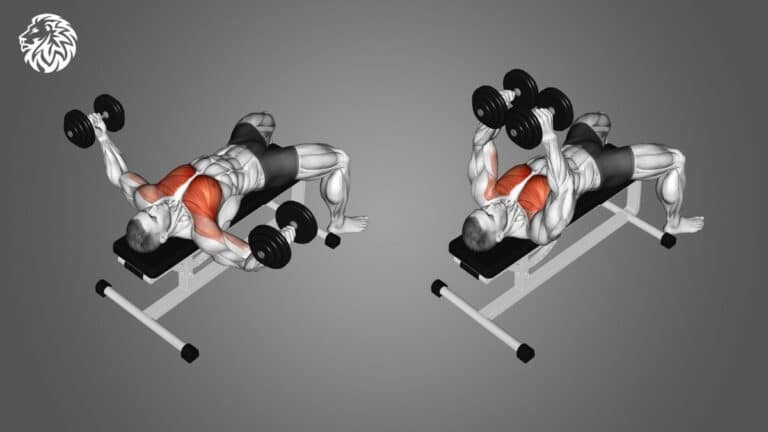
The decline dumbbell bench press gives your lower chest focused attention while helping you build balanced pressing strength. Many lifters rely on the flat or incline bench and overlook the value of training the lower portion of the pectorals. This movement helps you correct that gap. By working with dumbbells instead of a barbell, you allow each side of your chest to carry its share of the load, which supports better symmetry and stability. Whether you train at home or in a commercial gym, the decline dumbbell bench press adds meaningful strength and muscle to your routine.
Exercise Instructions
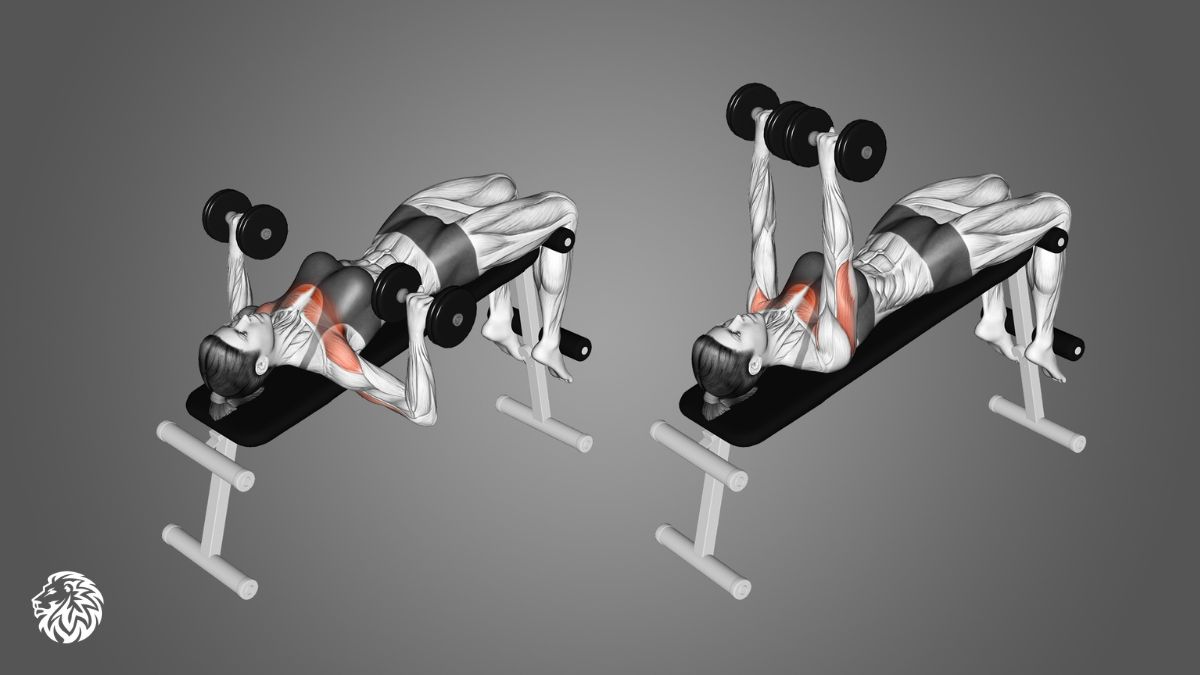
To perform the decline dumbbell bench press with proper form, follow these steps:
Set Up the Bench and Body Position
- Adjust your bench to a decline angle of about 15–30 degrees.
- Sit at the top of the bench and secure your feet under the foot pads.
- Hold a dumbbell in each hand and rest them on your thighs.
Get Into Starting Position
- Lean back slowly while guiding the dumbbells to your chest.
- Keep your back, head, and shoulders in contact with the bench.
- Position the dumbbells at chest level with elbows angled slightly down and out.
- Face your palms forward and maintain a stable grip.
Perform the Press
- Inhale during the lowering phase and exhale as you press upward.
- Press the dumbbells upward in a smooth, controlled motion.
- Extend your arms without locking your elbows.
- Keep your wrists neutral so your forearms stay aligned with the weight.
- Lower the dumbbells under control until they return to chest level.
Repeat for the desired number of reps while keeping your movements controlled. Avoid bouncing the weights off your chest or rushing through each rep. Slow, deliberate motion keeps your muscles under tension and reduces the chance of injury.
Muscles Targeted
The decline dumbbell bench press focuses on the lower portion of the pectoralis major. By training on a decline angle, you shift more workload to the lower chest fibers, which helps shape a fuller and stronger chest.
Alongside the chest, other muscles support the movement. Your triceps assist during the press and help extend your elbows. Your front deltoids also contribute during the upward phase. Your core must stay engaged so you remain stable on the decline bench. These supporting muscles help you maintain balance and proper movement patterns throughout the lift.
Why This Exercise is Important
The decline dumbbell bench press strengthens your lower chest while adding size and definition in an area that many lifters struggle to build. Since dumbbells require more stabilization than a barbell, your supporting muscles work harder, which improves your overall pressing mechanics. This movement also promotes better muscular symmetry because each arm presses independently. If one side is weaker, you quickly notice it, and this makes it easier to correct imbalances over time.
Training on a decline bench also reduces shoulder strain for many people. The angle changes the path of the press, allowing your shoulders to stay in a more comfortable range of motion. This can help if you experience discomfort during flat bench pressing. The decline dumbbell bench press rounds out your chest training and supports better upper body strength for both aesthetic and performance goals.
Tips and Things to Avoid
Keep the following tips in mind to help you perform the decline dumbbell bench press safely and effectively.
Tips:
- Warm up with light weights before moving to heavier sets.
- Keep your feet secured so you stay stable during the lift.
- Press the dumbbells on a slight inward path without touching them at the top.
- Maintain a neutral wrist position to protect your joints.
- Use controlled motion to keep your chest under tension.
Things to Avoid:
- Do not flare your elbows excessively, as this increases stress on your shoulders.
- Avoid dropping the dumbbells too low, which may cause strain or loss of control.
- Do not arch your back off the bench; stay in full contact with the pad.
- Avoid rushing the eccentric phase; lowering the weight slowly improves results.
- Do not start with weights that feel too heavy for your current strength level.
Reps and Sets
Here is a simple guide to help structure your training:
| Training Goal | Sets | Reps | Rest |
|---|---|---|---|
| Muscle Growth | 3–4 | 8–12 | 60–90 seconds |
| Strength | 4–5 | 4–6 | 2–3 minutes |
| Endurance | 2–3 | 12–15+ | 45–60 seconds |
Adjust the weight based on your experience and comfort. Use a load that challenges you but still allows proper form through every rep.
Other Exercises to Use
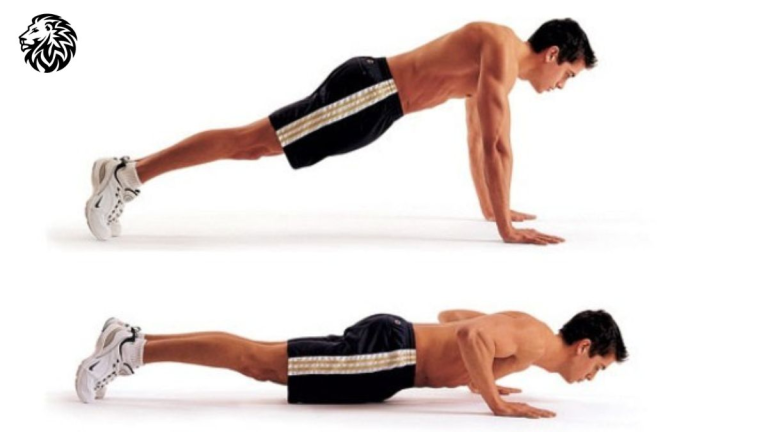
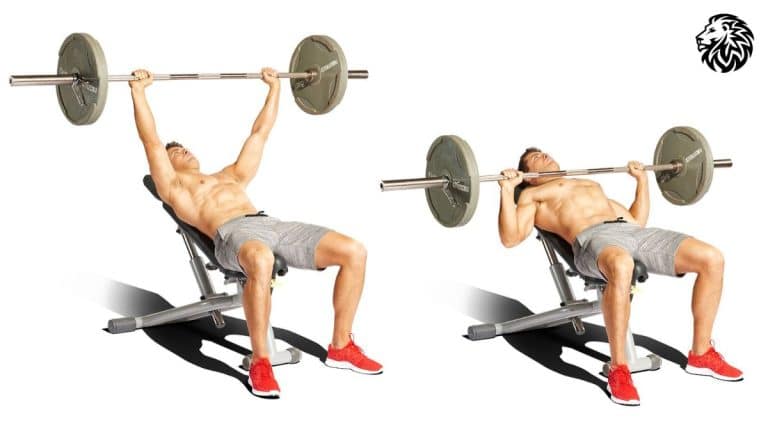
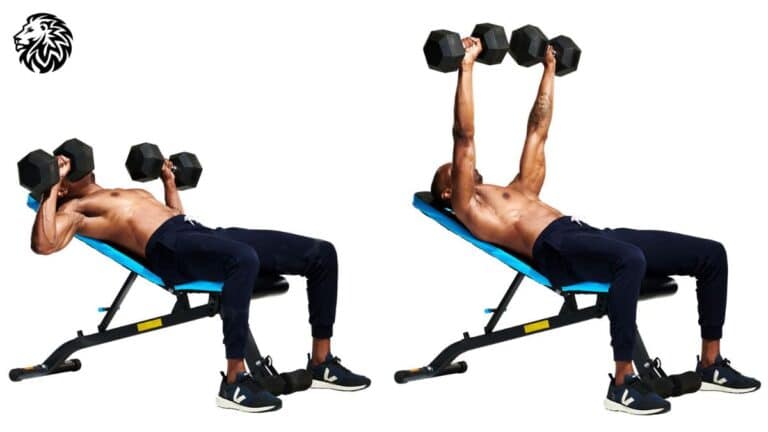
Pairing the decline dumbbell bench press with other chest exercises strengthens your upper body more effectively. You can add incline dumbbell presses to work the upper chest and flat dumbbell presses for full chest development. Dumbbell flyes help stretch and isolate the pectorals, improving muscle activation. Pushups add bodyweight resistance and support both strength and endurance. Rotating these exercises throughout your routine helps you build a balanced and well-developed chest.
Final Thoughts
The decline dumbbell bench press plays an important role in building a strong and balanced chest. By shifting the focus to the lower chest, you create better overall development and strength. The use of dumbbells adds freedom of movement and engages stabilizer muscles, which supports improved symmetry. As with any exercise, consistency and proper form matter most. Start with a comfortable weight, focus on control, and progress as your strength improves. This movement fits well in both beginner and advanced programs and remains a reliable choice for anyone looking to raise their pressing performance.
Frequently Asked Questions
Is the decline dumbbell bench press safe for beginners?
Yes. Start with light weights and focus on control. The decline angle often feels easier on the shoulders compared to the flat bench.
How far should I lower the dumbbells?
Lower them to chest level without overstretching. Stop when your elbows reach a comfortable position that keeps tension on the chest.
Do I need a special bench for this exercise?
You need a bench with a decline setting. Most adjustable benches provide at least one decline angle.
Should the dumbbells touch at the top?
No. Lift them upward on a slight inward path, but keep a small gap to maintain tension.
How often should I train this movement?
Most lifters perform it once or twice per week as part of their chest routine.