If you’re looking to strengthen and tone your upper body, a well-structured routine that targets multiple muscle groups is essential. This workout uses simple yet effective movements to build balanced strength across your chest, shoulders, back, biceps, and triceps. All you need is a pair of dumbbells and some floor space. Let’s break down each exercise, explain how it works, and show you how to combine them for an efficient upper-body session.
1. Dumbbell Curls – Build Strong, Defined Biceps
Primary muscles worked: Biceps brachii, brachialis, forearms
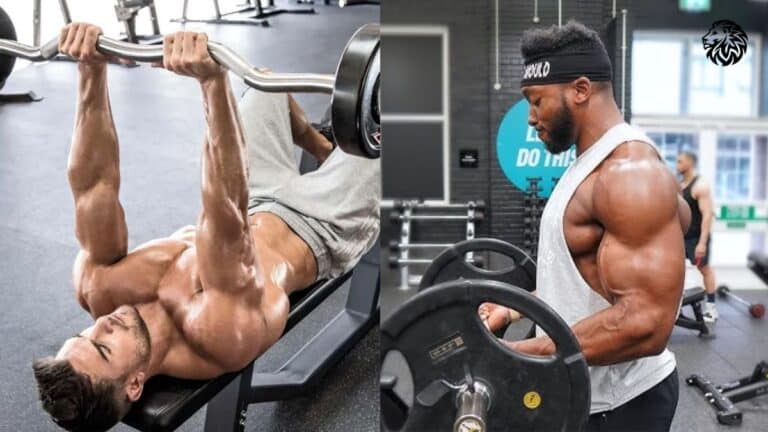
Start your upper-body workout with dumbbell curls to engage the biceps. Hold a dumbbell in each hand with your palms facing forward. Keep your elbows close to your sides as you curl the weights upward, squeezing the biceps at the top of the movement. Slowly lower the dumbbells back down under control.
To get the most from this exercise, avoid swinging your arms or using momentum. Focus on the contraction of your biceps during each rep. Perform 10 to 12 repetitions for 3 sets. This move helps shape and strengthen the front of your arms, improving both aesthetics and functional pulling power for other upper-body movements.
2. Tricep Kickbacks – Sculpt the Back of the Arms
Primary muscles worked: Triceps brachii
Once your biceps are warmed up, it’s time to hit the opposing muscle group — the triceps. Bend slightly at the hips, keeping your back flat and your core tight. Hold a dumbbell in each hand, bend your elbows at a 90-degree angle, then push the weights back until your arms are fully extended. Pause briefly at the top, then return to the starting position.
This movement targets the triceps, which make up a large portion of your upper arm mass. Strengthening them improves the balance between your biceps and triceps, giving your arms a more symmetrical appearance. Do 12 to 15 repetitions for 3 sets, maintaining slow and controlled motion to ensure proper form.
3. Bent-Over Rows – Strengthen the Lats and Upper Back
Primary muscles worked: Latissimus dorsi, rhomboids, rear deltoids, traps, biceps
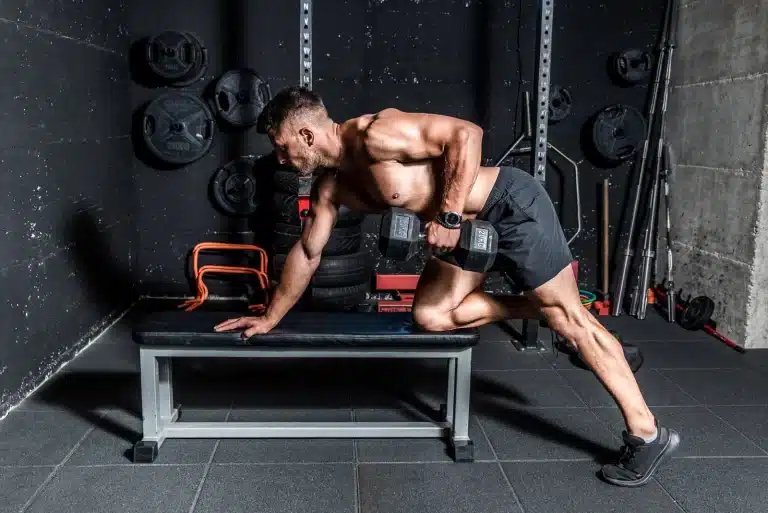
Bent-over rows are one of the most effective exercises for developing your back and improving posture. To perform the movement, hold a dumbbell in each hand with your palms facing inward. Bend your knees slightly and hinge at the hips until your torso is about 45 degrees from the floor. Keep your spine straight and your core tight. Pull the dumbbells toward your torso, squeezing your shoulder blades together at the top of the lift.
This exercise trains your lats, rhomboids, and rear deltoids — the key muscles responsible for pulling and stabilizing your shoulders. A strong back not only enhances your physique but also supports shoulder health and improves performance in other lifts such as push-ups and presses. Aim for 10 to 12 repetitions for 3 sets.
4. Lateral Raises – Define and Broaden the Shoulders
Primary muscles worked: Lateral deltoids, anterior deltoids, trapezius
Next, move into lateral raises to target the shoulder muscles. Stand tall with a slight bend in your elbows and hold a dumbbell in each hand at your sides. Lift the weights outward until your arms are parallel to the floor. Pause for a second, then lower them back down slowly.
This isolation exercise builds shoulder width and gives your upper body a more defined, balanced appearance. The key to success is control — avoid swinging the weights or using excessive load. Perform 12 to 15 repetitions for 3 sets. Strong shoulders enhance arm mobility and stability during daily activities and athletic movements.
5. Push-Ups – Chest, Shoulders, and Triceps Power
Primary muscles worked: Pectorals, deltoids, triceps, core
To complete your upper-body workout, move to the floor for push-ups. Start in a high plank position with your hands slightly wider than shoulder-width apart. Keep your body in a straight line from head to heels as you lower yourself until your chest nearly touches the floor. Push back up to the starting position.
Push-ups are a bodyweight staple that strengthens the chest while also engaging the triceps, shoulders, and core. They require no equipment and can be modified to suit any fitness level. Beginners can perform them on their knees, while advanced exercisers can elevate their feet or add resistance bands for extra intensity. Aim for 3 sets of 10 to 20 reps, depending on your strength level.
Putting It All Together
To build a balanced upper-body routine, perform all five exercises in sequence as a circuit. Rest for 30 to 45 seconds between moves and 90 seconds between rounds. Repeat the circuit three times for a complete session that takes about 25 to 30 minutes.
Here’s an example structure:
| Exercise | Sets | Reps |
|---|---|---|
| Dumbbell Curls | 3 | 10–12 |
| Tricep Kickbacks | 3 | 12–15 |
| Bent-Over Rows | 3 | 10–12 |
| Lateral Raises | 3 | 12–15 |
| Push-Ups | 3 | 10–20 |
This routine covers all major muscle groups in your upper body, improving both strength and definition. It’s ideal for people who want a simple yet effective workout that can be done at home or in the gym.
Training Tips for Better Results
- Warm up first: Spend 5–10 minutes doing light cardio or dynamic stretches to prepare your joints and muscles.
- Focus on form: Quality over quantity. Maintain controlled movements and proper posture to avoid injury.
- Progress gradually: Increase weight or repetitions over time as your strength improves.
- Stay consistent: Perform this workout 2–3 times a week, giving at least 48 hours of rest between sessions for muscle recovery.
- Combine with lower-body training: For total-body strength, alternate upper and lower-body workouts throughout the week.
Final Thoughts
This upper-body routine efficiently targets your biceps, triceps, shoulders, back, and chest using a straightforward set of exercises. Whether you’re training at home with dumbbells or in the gym, these moves can help you build lean muscle, improve endurance, and enhance your overall physique. Consistency and proper technique are key. Stick with this program, and you’ll notice stronger, more sculpted arms, shoulders, and chest in just a few weeks.