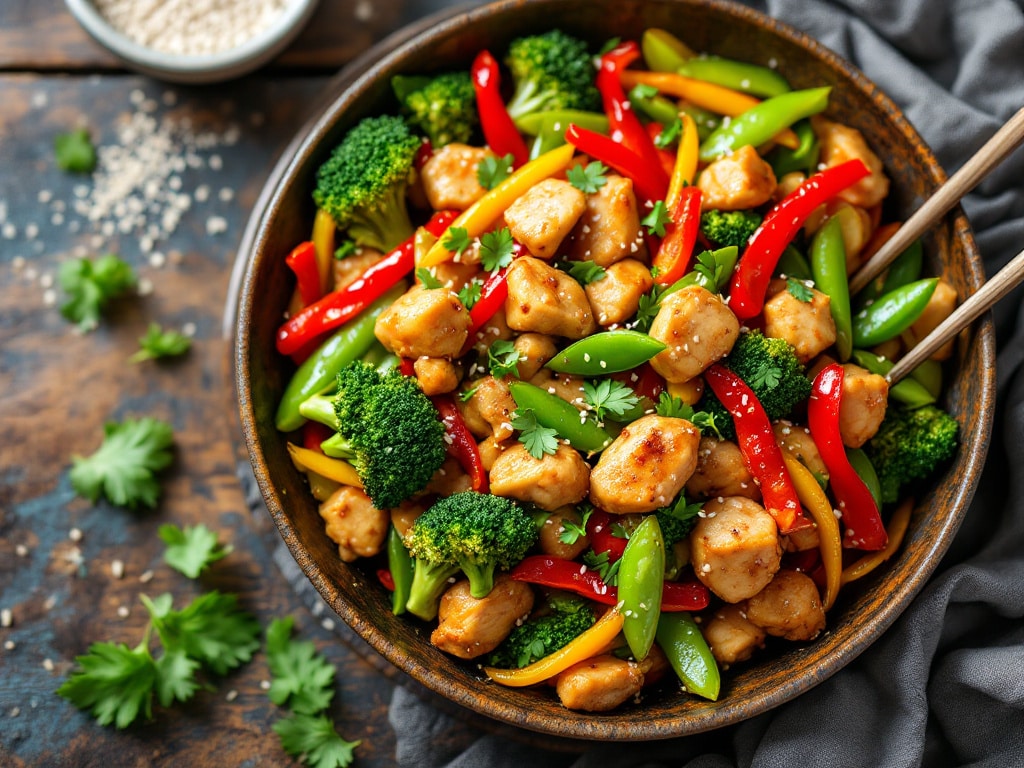
If you’re looking for a hearty meal that still keeps things light, a chicken stir fry might just be your new favorite go-to. It’s loaded with lean protein, colorful veggies, and a punch of savory goodness. Let’s walk through what makes this dish special and how you can whip it up in no time.
Embrace the high-protein advantage
You already know that protein is key for muscle repair and overall health. But how exactly does a chicken stir fry support your high-protein diet? First off, chicken boasts a strong protein profile with fewer calories than many other options. Stir fry cooking also allows you to use less oil than other cooking methods, so you keep the dish nutrient-dense without adding extra fat.
- Opting for chicken breast gives you more protein and less saturated fat.
- Balancing your plate with vegetables boosts fiber and essential nutrients.
- Including a moderate amount of whole grains (like brown rice) rounds out the meal.
Gather your key ingredients
Before diving into the pan, it’s helpful to line up all your ingredients. This way, you won’t scramble mid-cook.
- Chicken: Skinless breast or thigh pieces (about 1 pound)
- Vegetables: Broccoli florets, sliced bell peppers, carrots, onions (or whatever you love)
- Sauce components: Low-sodium soy sauce, minced garlic, ginger, a little cornstarch for thickening
- Oil: A small amount of canola or olive oil
- Optional extras: Sesame seeds for garnish, crushed red pepper flakes for heat
Prep tips
- Chop chicken into bite-sized chunks for even cooking.
- Slice your veggies into similar sizes so they cook at the same rate.
- Mix your sauce in a small bowl beforehand. Adjust the seasoning to taste, but start light on salt since soy sauce is already savory.
Cook your chicken stir fry
Ready to fire up the stovetop? A bit of quick work here pulls the whole dish together.
- Heat oil: Warm a tablespoon of oil in a wok or large skillet over medium-high heat.
- Cook chicken: Add the chicken pieces, sprinkle a pinch of salt, and stir frequently. Once fully cooked (internal temperature of 165°F), set chicken aside.
- Sauté veggies: Toss in your chosen vegetables. Stir occasionally, letting them get a slight sear but not overcooking.
- Combine again: Return the chicken to the pan, pour in your sauce, and let everything simmer for a minute or two until the sauce thickens.
Amp up the flavor
Sometimes you’ll want more than just the classic soy sauce and garlic combination. Feel free to mix and match extras that fit your taste buds.
- Add a splash of citrus (like fresh orange or lime) for tangy brightness.
- Stir in some chili paste or sriracha for extra heat.
- Include a handful of bean sprouts or bok choy for a crunchy twist.
- Finish with a drizzle of sesame oil for that signature stir fry aroma.
Store leftovers smartly
One of the best parts about stir fry is how well it stores for another meal. Once the chicken stir fry cools, transfer it into an airtight container.
- Keep it in the fridge for up to 3 days.
- Reheat gently on the stovetop or in the microwave, adding a splash of water if the sauce thickens too much.
- Avoid overcooking on reheat, or the chicken can dry out.
Try experimenting with different vegetables each time you make chicken stir fry. It’s a great way to keep your high-protein diet exciting without needing a major time commitment. If you ever need a quick dinner fix, this stir fry fits perfectly into a busy schedule. Happy cooking!
High-Protein Diet Recipe for Chicken Stir Fry
Ingredients
Chicken: Skinless breast or thigh pieces (about 1 pound)
Vegetables: Broccoli florets, sliced bell peppers, carrots, onions (or whatever you love)
Sauce components: Low-sodium soy sauce, minced garlic, ginger, a little cornstarch for thickening
Oil: A small amount of canola or olive oil
Optional extras: Sesame seeds for garnish, crushed red pepper flakes for heat
Directions
- Heat oil: Warm a tablespoon of oil in a wok or large skillet over medium-high heat.
- Cook chicken: Add the chicken pieces, sprinkle a pinch of salt, and stir frequently. Once fully cooked (internal temperature of 165°F), set chicken aside.
- Sauté veggies: Toss in your chosen vegetables. Stir occasionally, letting them get a slight sear but not overcooking.
- Combine again: Return the chicken to the pan, pour in your sauce, and let everything simmer for a minute or two until the sauce thickens.
Notes
- Chop chicken into bite-sized chunks for even cooking.
Slice your veggies into similar sizes so they cook at the same rate.
Mix your sauce in a small bowl beforehand. Adjust the seasoning to taste, but start light on salt since soy sauce is already savory.