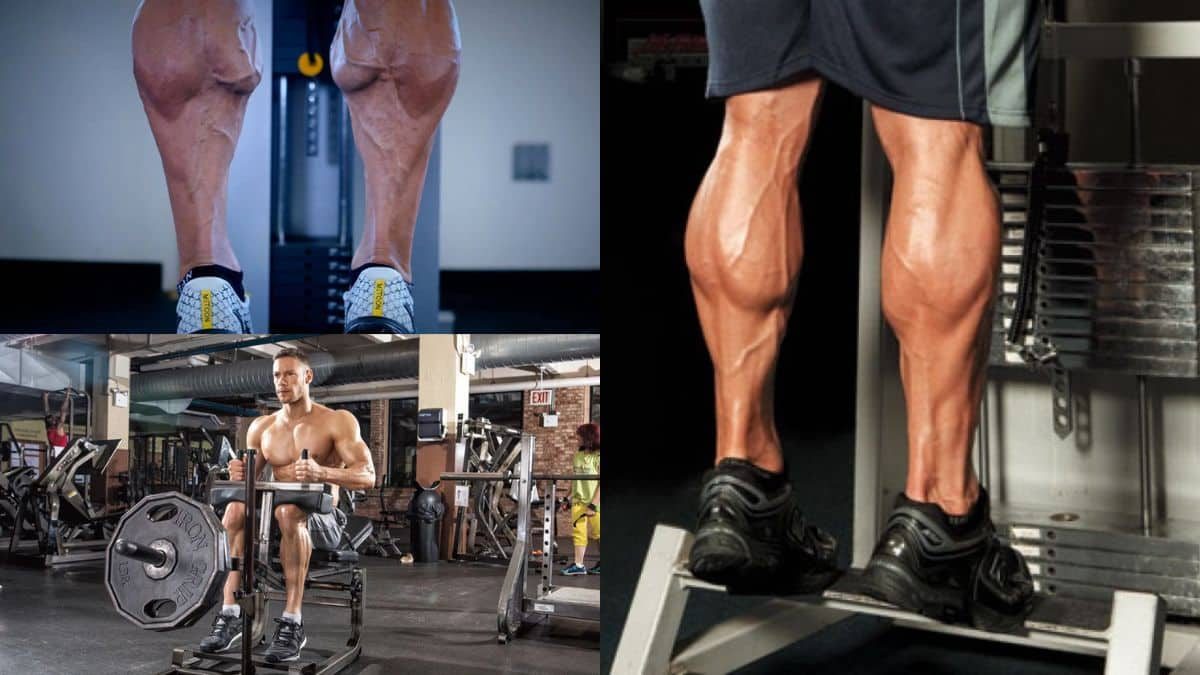
Building strong calf muscles gives you better balance, stronger athletic performance, and a more defined lower body. Many people struggle to grow their calves because these muscles work all day, which means they need focused training with proper form and consistent tension. The right exercises help you hit both major calf muscles—the gastrocnemius and the soleus—so you see growth from every angle.
You will use four effective exercises that challenge your calves through a full range of motion. Each movement lets you load the muscles in a safe and controlled way, so you build strength and size without putting pressure on your joints. By following the instructions, tips, and rep schemes ahead, you set yourself up for steady progress and stronger calves.
Leg Press Calf Raises
Leg Press Calf Raises give you a controlled way to load your calves without worrying about balance. You can focus on pushing through the balls of your feet and squeezing your calves at the top of each rep. This machine setup supports your lower back and keeps your legs stable, which helps you train with more weight and better form.
How To Perform
- Sit on the leg press machine and place your feet high on the platform with your heels hanging slightly off the edge.
- Keep your legs extended but avoid locking your knees.
- Press the platform by pushing through the balls of your feet while raising your heels as high as you can.
- Pause at the top to contract your calves.
- Lower your heels slowly until you feel a strong stretch in your calves.
- Repeat for your target number of reps.
Tips
- Use a full stretch at the bottom to recruit more muscle fibers.
- Keep your movement slow and controlled to avoid bouncing.
- Push evenly through both feet to avoid shifting to one side.
- Choose a weight that lets you reach the full range without losing form.
Sets and Reps
Recommended Training Structure
| Experience Level | Sets | Reps | Notes |
|---|---|---|---|
| Beginner | 3 | 12–15 | Focus on control and full movement. |
| Intermediate | 4 | 12–20 | Increase weight while keeping a full stretch. |
| Advanced | 4–5 | 15–20 | Add slow negatives or pauses at the top. |
Smith Machine Calf Raise
Smith Machine Calf Raises help you focus on pure calf contraction since the machine stabilizes the bar for you. You don’t have to worry about balance, which lets you lift heavier and maintain a smooth range of motion. This exercise targets the gastrocnemius and works well for building height and shape in your calves.
How To Perform
- Position a step or weight plate under the bar so your heels can drop below your toes.
- Stand under the bar with it resting across your upper traps and unrack it.
- Place the balls of your feet on the step with your heels hanging off.
- Keep your legs straight but avoid locking your knees.
- Raise your heels as high as possible while squeezing your calves at the top.
- Lower your heels slowly until you feel a deep stretch.
- Complete the full set before reracking the bar.
Tips
- Keep your core tight to stay upright under the bar.
- Use a consistent tempo so each rep trains the muscle evenly.
- Avoid rocking forward or backward; stay centered over your feet.
- Start with lighter weight if you’re new to the machine.
Sets and Reps
Recommended Training Structure
| Experience Level | Sets | Reps | Notes |
|---|---|---|---|
| Beginner | 3 | 10–12 | Practice balance and consistent height on each rep. |
| Intermediate | 4 | 12–15 | Increase load gradually while maintaining control. |
| Advanced | 4–5 | 15–20 | Add pauses at the top or slow negatives for extra tension. |
Seated Calf Raises
Seated Calf Raises focus on the soleus muscle, which sits underneath the gastrocnemius and adds width and thickness to your calves. Because your knees stay bent during this movement, the soleus takes on most of the work. You get a strong burn and steady tension, which helps you build calves that look fuller and more balanced.
How To Perform
- Sit on the seated calf raise machine and place the balls of your feet on the platform with your heels hanging off.
- Position the thigh pads so they rest snugly above your knees.
- Release the safety lever and lower your heels slowly until you feel a deep stretch.
- Press through the balls of your feet to raise your heels as high as you can.
- Squeeze your calves at the top before lowering again with control.
- Complete all reps with steady movement from start to finish.
Tips
- Keep your hips and torso still to avoid shifting tension away from your calves.
- Focus on slow, controlled reps to maximize the burn in the soleus.
- Work through the full stretch to improve mobility and muscle activation.
- Avoid bouncing at the bottom; this reduces muscle engagement and increases injury risk.
Sets and Reps
Recommended Training Structure
| Experience Level | Sets | Reps | Notes |
|---|---|---|---|
| Beginner | 3 | 12–15 | Use moderate weight and prioritize a full stretch. |
| Intermediate | 4 | 15–20 | Increase weight while maintaining smooth form. |
| Advanced | 4–5 | 20–25 | Add tempo work or pauses at the bottom and top. |
Standing Dumbbell Calf Raises
Standing Dumbbell Calf Raises give you a simple but effective way to build calf strength without relying on machines. Holding dumbbells helps you load your calves evenly while keeping the movement natural. This exercise targets the gastrocnemius and supports better balance, ankle strength, and overall lower-leg development.
How To Perform
- Stand tall with a dumbbell in one or both hands and your feet about hip-width apart.
- Position the balls of your feet on a step or sturdy weight plate so your heels can lower below your toes.
- Keep your legs straight but avoid locking your knees.
- Raise your heels as high as you can, driving through the balls of your feet.
- Squeeze your calves at the top, then lower your heels slowly until you feel a deep stretch.
- Maintain smooth, steady movement for the full set.
Tips
- Keep your core tight to help your balance.
- Move through a full range instead of rushing the reps.
- Avoid leaning forward or shifting your weight to your toes.
- Start with lighter dumbbells if your balance feels unsteady, then increase weight as your stability improves.
Sets and Reps
Recommended Training Structure
| Experience Level | Sets | Reps | Notes |
|---|---|---|---|
| Beginner | 3 | 12–15 | Focus on balance and a full stretch on every rep. |
| Intermediate | 4 | 15–20 | Add weight slowly while keeping movement controlled. |
| Advanced | 4–5 | 20–25 | Add slow negatives or pauses for added intensity. |
Final Thoughts
Strong calves play a key role in your stability, power, and overall lower-body strength. When you train them with exercises that hit both the gastrocnemius and soleus, you build muscle that supports your athletic performance and daily movement. The four exercises you used—Leg Press Calf Raises, Smith Machine Calf Raises, Seated Calf Raises, and Standing Dumbbell Calf Raises—give you a balanced approach so you can keep growing your calves from every angle.
Stay consistent with your training and use controlled reps that stretch and contract the muscles fully. Small improvements in form and tempo make a big difference in how your calves respond. Stick with the program, track your progress, and you’ll see steady gains over time.
Frequently Asked Questions
How often should you train your calves?
You can train your calves two to three times per week. They recover quickly, so frequent training helps you see better growth.
Should you go heavy or light on calf exercises?
Use both. Heavy weight builds strength, while higher reps with controlled tempo help you build muscle size. Mixing the two creates strong results.
Why are calves hard to grow?
Your calves work all day when you walk and stand, so they adapt quickly. You need focused training with tension, full range of motion, and consistent progression to make them grow.
How long does it take to see progress?
Most people notice changes within four to eight weeks if they train consistently and use proper technique.
Should you stretch your calves?
Yes. Stretching before and after your workout helps you improve your range of motion and reduces tightness that can limit growth.